

Operational Guidance
Maintaining Nozzle Performance in Real-World Conditions
Maximising blast nozzle performance is not only about selecting the correct bore size or liner material. Day-to-day inspection, correct installation, careful handling, and timely replacement all play a critical role in maintaining stable airflow, consistent cutting performance, and controlled abrasive consumption.
In practical site conditions, small issues such as worn bores, damaged gaskets, poor sealing, or impact damage can quickly lead to higher air demand, uneven blast patterns, increased noise, and unnecessary wear elsewhere in the blasting system. Managing the nozzle as a working component — rather than a consumable run to failure — helps maintain predictable performance and avoid avoidable downtime.
Operational Guidance for Optimal Performance
The following guidance sets out established good practice used by professional blasting contractors to support reliable operation, consistent productivity, and safe use throughout the nozzle’s service life.
Inspect and Rotate Regularly
- Inspect bore diameter every 20–30 operating hours
- Replace the nozzle once bore wear increases by 1.5 mm or more
- Inspect gaskets, O-rings, and threads for damage or contamination
- Always use the supplied rubber gasket/washer
Failure to use the correct gasket will cause air leakage, vibration, and potential nozzle failure. Rotate nozzles where possible to balance wear and identify early wear patterns.
Handle and Store with Care
Flo-Blast nozzles are precision-engineered components.
- Never drop or strike the nozzle on hard surfaces
- Store in clean, dry conditions — ideally in original packaging
- For demanding site work, DuraGrip sleeves help reduce shock and vibration
Use the Right PPE and Ergonomics
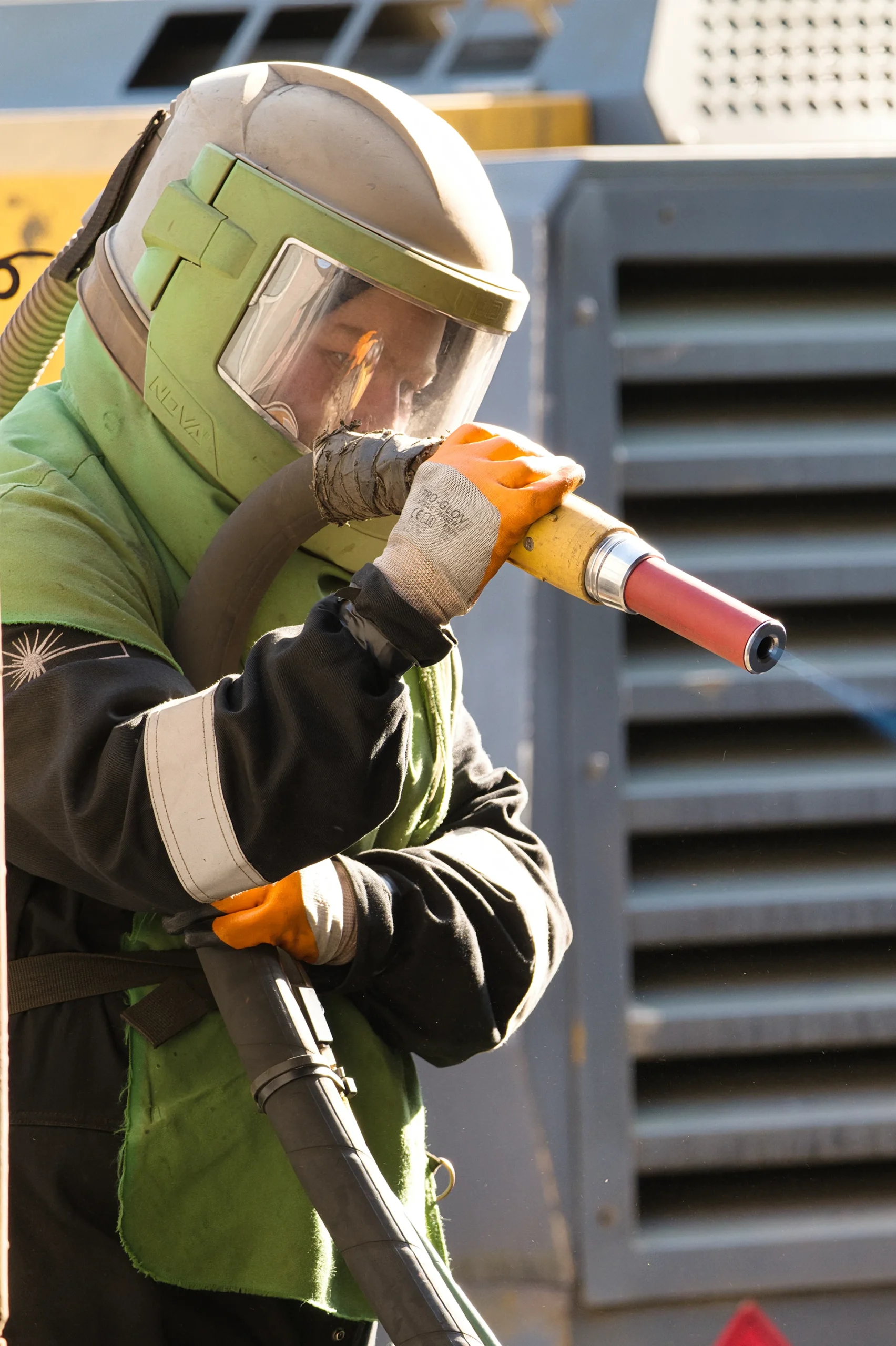
- Always wear approved blast suits, gloves, and respiratory protection
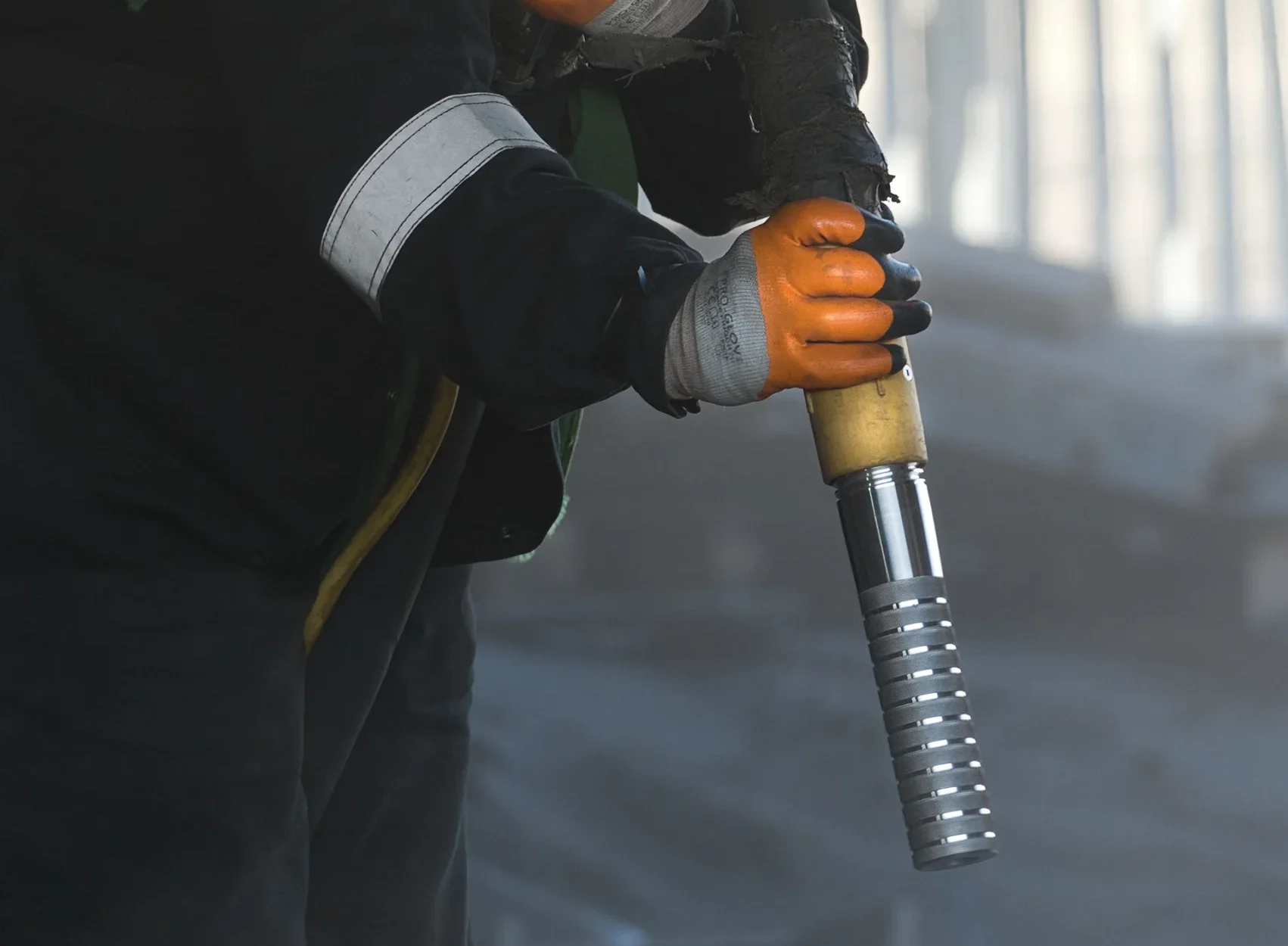
- Keep both hands on the nozzle — unsupported use increases wear and uneven blast profiles
- For long shifts, lightweight SSiC, SiAlON, or B₄C nozzles help reduce fatigue
Replace Components Proactively
Do not wait for total failure.
A worn nozzle increases air consumption, reduces cutting speed, and wastes abrasive. Track operating hours, abrasive type, and duty cycle, and replace nozzles before performance loss becomes costly.
Monitor Noise and Dust Levels
A correctly matched nozzle operates more efficiently, producing lower noise and improved dust control — supporting safer, more compliant blasting operations.
Nozzle Productivity Reference
Use the below reference table to make informed decisions that balance air consumption with cleaning efficiency, helping to maximise productivity while avoiding unnecessary strain on equipment.
Nozzle Productivity Reference
The table below provides a practical reference for typical air consumption and surface cleaning rates achieved with common nozzle sizes under standard blasting conditions, helping operators understand how bore selection directly influences productivity and air demand.
| Nozzle Size | Orifice (inch/mm) | Air Flow (CFM) | Cleaning Rate (m2/hr) |
|---|---|---|---|
| 4 | 1/4” / 6 mm | 81 | 3 |
| 5 | 5/16” / 8 mm | 137 | 6 |
| 6 | 3/8” / 9.5 mm | 196 | 9 |
| 7 | 7/16” / 11 mm | 254 | 12 |
| 8 | 1/2” / 12.5 mm | 338 | 15 |
Performance at 100 PSI with clean, dry air
Note: Hose restriction, nozzle wear, or insufficient compressor capacity will significantly reduce productivity.
Measuring Productivity Gains
- 6 mm → 8 mm: 3 → 6 m²/hr (+100%)
- 9.5 mm → 11 mm: 9 → 12 m²/hr (+33%)
Financial Impact Example
At £10 per m², moving from 6 mm to 8 mm delivers:
- +£240/day
- +£1,200/week
- +£4,800/month
Expert Support
Need help selecting the right nozzle?
Our technical team provides application-specific guidance based on:
- Surface condition and coating type
- Access limitations
- Abrasive selection
- Compressor capacity and air delivery
- Desired productivity and cost targets
Ready to Discuss Your Requirements?
Get in touch with our team today for technical advice, custom solutions, or to place an order. We’re here to support your industrial operations.
Explore Our Technical Resources
Explore Our Technical Resources

Materials & Liner Types
Explore our range of materials: Tungsten Carbide Silicon Carbide, SiAlON (Advanced Silicon Nitride Ceramic) and Boron Carbide.
Each engineered for specific applications.
- Premium material options
- Detailed specifications & properties
- Application recommendations

Nozzle Selection Guide & Application Advice
Choose the perfect nozzle with our comprehensive guide. Consider media type, pressure, flow rate, and application requirements.
- Step-by-step selection process
- Application-specific guidance
- Expert recommendations